
The History of Nuclear Power Accidents and the Lessons Learned
Since the mid-20th century, when humanity first began to discover and utilize nuclear energy, major and minor nuclear power plant accidents have occurred repeatedly.
.
More than almost any other type of industrial accident, nuclear incidents demand swift and transparent initial responses. Unfortunately, in many cases, attempts by those responsible to conceal or downplay accidents only caused the situation to spiral out of control, resulting in far greater consequences.
.
Through the lens of the Fukushima nuclear disaster in Japan, it is worth revisiting some of the most significant nuclear accidents that have occurred worldwide.
.
.
.
The Chernobyl Nuclear Power Plant Disaster (Former Soviet Union)
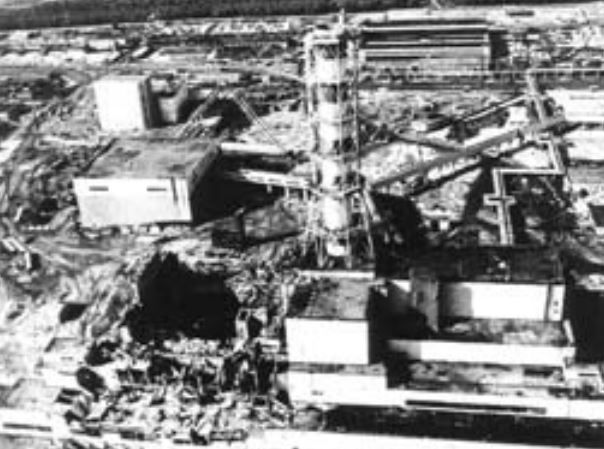
Widely regarded as the worst nuclear accident in history, the Chernobyl disaster occurred on April 26, 1986, in the former Soviet Union, in what is now Ukraine.
.
The International Atomic Energy Agency (IAEA) later classified the accident as Level 7—the highest level—on the International Nuclear and Radiological Event Scale (INES), which was introduced in 1992.
.
The accident occurred during a safety test when reactor power surged unexpectedly, triggering a massive explosion.
As Reactor No. 4 at the Chernobyl plant exploded, radioactive fallout spread across more than 145,000 square kilometers of the former Soviet region, including Ukraine, Russia, and Belarus.
.
As a result, an estimated 8 million people were directly or indirectly exposed to radiation, and the death toll is believed to have reached approximately 9,300.
Around 330,000 residents were forcibly relocated, and long-term effects such as increased cancer rates and birth defects were observed among affected populations.
For these reasons, the Chernobyl disaster remains recorded as the most catastrophic nuclear accident in history.
.
Experts identified a fundamental design flaw in the Chernobyl reactor as the most decisive cause of the accident.
In the immediate aftermath, helicopters were used to drop boron and sand over the exposed reactor in an attempt to reduce radiation release.
Later, the reactor was sealed within a massive concrete structure—often referred to as a “sarcophagus”—to prevent further emissions.
.
Only about 4 percent of the reactor’s radioactive material is believed to have been released, with the remaining 96 percent still contained within the structure.
Although concrete barriers were installed around the site and a 48-kilometer exclusion zone was established, the damage caused by the initial radiation release continues to affect the region to this day.
.
.
.
The Three Mile Island Nuclear Accident (United States)
The United States has also experienced a major nuclear power plant accident.
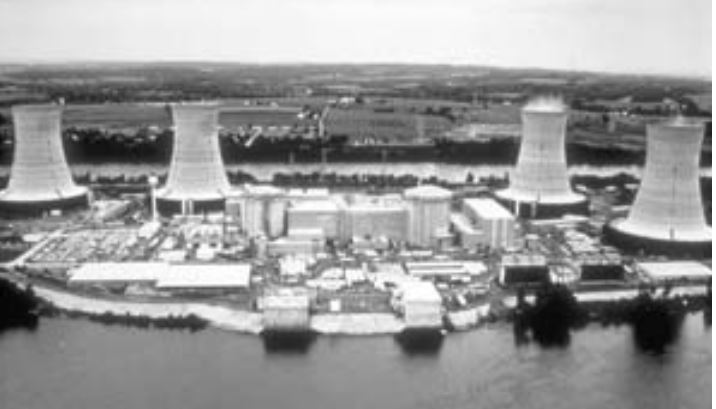
On March 28, 1979, an incident occurred at the Three Mile Island Nuclear Generating Station near Middletown, Pennsylvania.
The accident was classified as Level 5 on the INES scale.
.
At Unit 2 of the plant, a failure in the feedwater system responsible for removing heat from the steam generators caused both the turbine and the reactor to shut down automatically.
During this process, a safety relief valve opened to reduce pressure but failed to close, allowing coolant to escape from the system.
.
Within just a few hours, the reactor’s primary cooling system was severely compromised, and internal temperatures rose above 5,000 degrees.
This led to a partial core meltdown, during which nuclear fuel rods melted and the reactor vessel itself was damaged.
.
Concerned about potential exposure, state authorities ordered the evacuation of pregnant women and young children.
Public panic followed, and approximately 200,000 residents temporarily left the area.
However, investigation reports later concluded that the plant’s one-meter-thick containment structure effectively limited radiation leakage, preventing widespread direct harm to the surrounding population.
.
Although no definitive evidence of fatal health effects among residents was confirmed, the accident sparked intense nationwide debate over the safety of nuclear power.
The shock was particularly profound because the incident occurred in the United States, a country widely regarded at the time as a leader in advanced science and technology.
.
.
.
.
The Fukushima Nuclear Power Plant Disaster (Japan)
Japan experienced multiple nuclear-related incidents even before the Fukushima Daiichi disaster in 2011.
.
On October 1, 1999, Japan’s worst radiation leak prior to Fukushima occurred at a nuclear fuel processing facility operated by JCO.
A total of 439 people—including company employees, local residents, and firefighters—were exposed to radiation.
Two workers died after being exposed to radiation levels comparable to those seen in the Chernobyl disaster.
.
In addition, approximately 310,000 residents living within a 10-kilometer radius of the facility were ordered to remain indoors, plunging Japanese society into shock and uncertainty.
.
In July 2007, another incident occurred when an earthquake shook a spent nuclear fuel storage facility, leading to the detection of radioactive substances in the air near the plant’s main exhaust stack.
As a result, the government ordered the temporary shutdown of the facility.
.
The most severe accident occurred on March 11, 2011, following the massive Tōhoku earthquake and tsunami, which triggered the Fukushima Daiichi nuclear disaster.
Although temperature and pressure levels were not immediately critical, the loss of power and damage to key systems caused by the earthquake and tsunami rapidly escalated the situation.
.
Radioactive materials were eventually released continuously into surrounding areas, raising alarm not only across Japan but around the world.
The Fukushima disaster served as a stark reminder of the need for fundamental reassessment of nuclear safety and crisis response systems on a global scale.
.
.
International Nuclear and Radiological Event Scale (INES)
Major Nuclear Accidents by Year
-
April 1986
Chernobyl Nuclear Power Plant Accident (Ukraine) -> Level 7. -
March 2011
Fukushima Daiichi Nuclear Power Plant Accident (Japan) -> Level 6. -
March 1979
Three Mile Island Nuclear Accident (United States) -> Level 5.
INES Classification Levels
Level 7 – Major Accident
-
Large release of radioactive material
-
Severe impact on human health and the environment
Level 6 – Serious Accident
-
Significant release of radioactive material to the environment
Level 5 – Accident with Wider Consequences
-
Limited release of radioactive material outside the facility
-
Occurrence of fatalities
-
Severe damage to the reactor core
Level 4 – Accident with Local Consequences
-
At least one fatality due to radiation exposure
-
Minor release of radioactive material
.
.
.
.
Level 3 – Serious Incident
-
Severe radiation exposure to plant workers
-
Unexpected and significant radioactive contamination in the surrounding area
-
Accidents occurring near nuclear fuel processing facilities
Level 2 – Incident
-
Legal dose limit exceeded for nuclear-related workers
-
Radiation exposure within the facility
-
Contamination confined within the plant
Level 1 – Anomaly
-
Minor problems related to operational safety margins
Level 0 – Deviation (No Safety Significance)
-
Minor irregularities during normal nuclear plant operations