
Why Belt-Type Safety Harnesses Are Dangerous
In construction sites, safety harnesses play a critical role in protecting workers’ lives. Many fatal accidents still occur simply because workers fail to wear safety equipment. However, does wearing a safety harness always prevent death in a fall?
.
.
.
.
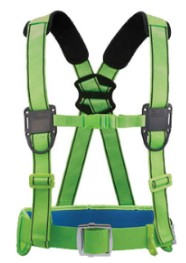
Unfortunately, the answer is no. In South Korea, statistics show that nearly half of fatal fall accidents at construction sites occur even when workers were wearing safety harnesses. One of the main reasons is the continued use of belt-type safety harnesses, which support only the waist.
Belt-type harnesses concentrate body weight on the waist during a fall.
.
This can lead to severe injuries such as suffocation caused by abdominal compression or serious spinal fractures. Due to these risks, the use of belt-type harnesses has been gradually decreasing. However, compared to other developed countries, their usage rate in Korea remains relatively high.
.
.
.
.
In Japan, a well-known fall experiment was conducted using monkeys. Monkeys wearing full-body (suspension-type) harnesses were able to hang safely for over 30 minutes without serious health issues and survived. In contrast, monkeys wearing belt-type harnesses suffocated within about 90 seconds after the fall.
.
.

.
.
Based on these findings, safety experts strongly argue that belt-type harnesses are not suitable for fall protection. They emphasize the urgent need to replace them with full-body safety harnesses that properly support the entire body and significantly reduce the risk of fatal injuries.
.
.