
Oxygen Deficiency: A Hidden Danger in Daily Life
No one can survive even a single day without oxygen. If the brain is deprived of oxygen for just ten seconds, a person can lose consciousness. Although everyone knows oxygen is essential for life, few people truly understand how serious oxygen deficiency can be. So what exactly is oxygen shortage, and why is it so dangerous in industrial sites and everyday life?
.
.
.
.
Even a 2% Drop in Oxygen Can Be Dangerous
“Can you live without oxygen?”
This famous line from a TV commercial for Korea’s first oxygen beverage highlights a simple truth: oxygen is the most fundamental element of life.
However, in today’s highly industrialized and urbanized world, exhaust fumes from vehicles and harmful gases released from apartments, factories, and offices are steadily reducing the amount of oxygen around us. Oxygen deficiency can cause mild symptoms such as headaches and fatigue, but it can also lead to serious conditions including asthma, stroke, heart disease, and atherosclerosis.
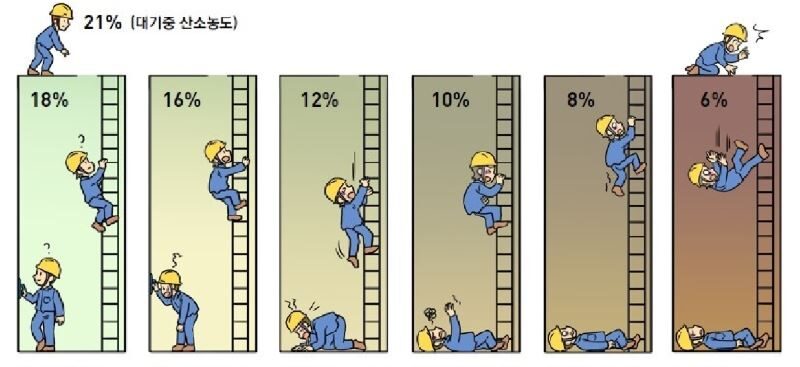
In 1931, German scientist Otto Warburg, who won the Nobel Prize in Physiology or Medicine, proposed the “oxygen deficiency theory,” suggesting that cancer originates from a lack of oxygen in cells. Other studies show that when oxygen concentration drops to 19.5% or lower, symptoms of hypoxia—such as reduced concentration, nausea, and headaches—begin to appear.
In a 2004 experiment conducted by a Korean broadcasting company, five people were placed inside a sealed car with the engine running. After 30 minutes, the oxygen level inside the vehicle dropped from 20.4% to 18.5%. After 45 minutes, participants experienced breathing difficulties, forcing the experiment to stop.
According to research by the Korea Advanced Institute of Science and Technology (KAIST), when oxygen levels fall to 18%, drivers react more quickly when pressing the brake pedal. This is because fatigue increases by nearly 50% under low-oxygen conditions—evidence that oxygen deficiency can increase the risk of accidents.
Another experiment showed striking results. Participants breathing air with only 8% oxygen were unable to write their own names. In contrast, those breathing air with 30% oxygen showed increased brain activity, improved perception, and better language task performance. This demonstrates how oxygen concentration can directly affect human cognitive abilities.
.
.
.
.
Low-Oxygen Spaces Around Us
Oxygen deficiency is also a major cause of serious workplace accidents. Every summer, fatal incidents occur when workers enter confined spaces and suffer from oxygen shortage. These accidents continue to happen year after year.
Service workers who spend long hours in crowded public spaces such as large retail stores, as well as those working in enclosed environments like cars, buses, subways, and airplanes, often report discomfort caused by oxygen deficiency.
A survey of subway station staff revealed that more than half experienced early symptoms of hypoxia, including fatigue and headaches. In addition, 85% of respondents identified poor environmental conditions and lack of oxygen as the main causes.
According to Korea’s Occupational Safety and Health regulations, air with an oxygen concentration below 18% is classified as an oxygen-deficient environment. In such workplaces, ventilation and the use of supplied-air respirators are mandatory.
Measurements taken in everyday locations reveal concerning results: oxygen levels during rush hour in subways were measured at 19.4%, inside saunas at 18.5%, and inside sealed vehicles at just 18%. These levels are low enough to cause hypoxia symptoms and, in severe cases, even death.
The real problem is that these low-oxygen spaces exist all around us, and we enter them easily and frequently without realizing the risk.
.
.
.
.
The Importance of Oxygen We Often Forget
Despite constant exposure to low-oxygen environments, many people fail to recognize the danger. In a sense, urban residents may be gradually adapting to chronic oxygen deficiency without noticing it.
Modern buildings, such as apartments designed for insulation and energy efficiency, can quickly become oxygen-poor if not properly ventilated. Studies show that in sealed rooms, oxygen levels decrease by about 0.1% per hour, while carbon dioxide levels increase more than tenfold, reaching as high as 5,000 ppm.
Environmental guidelines recommend ventilation when carbon dioxide levels exceed 1,000 ppm. A level of 5,000 ppm essentially means sleeping inside a container filled with carbon dioxide.
Carbon monoxide found in cigarette smoke is comparable in concentration to vehicle exhaust fumes. When these irritants enter the body, the respiratory system responds defensively by narrowing the airways, preventing sufficient oxygen from reaching the lungs.
Humans have long used oxygen freely, without cost or concern. However, as environmental pollution worsens, we have entered an era where people literally purchase oxygen. Because oxygen is invisible, its importance is often overlooked. It is time to reconsider how oxygen deficiency affects our health—and how vital oxygen truly is to human life.
.
.
.
.
What Happens When Oxygen Levels Are Too Low?
-
Brain: Stroke
-
Eyes: Dry eyes, corneal swelling
-
Nose: Sleep apnea
-
Ears: Tinnitus
-
Heart: Cardiovascular disease
-
Fetus: Low birth weight, developmental delays
-
Skin: Premature aging, skin problems
-
Cancer: Increased risk