
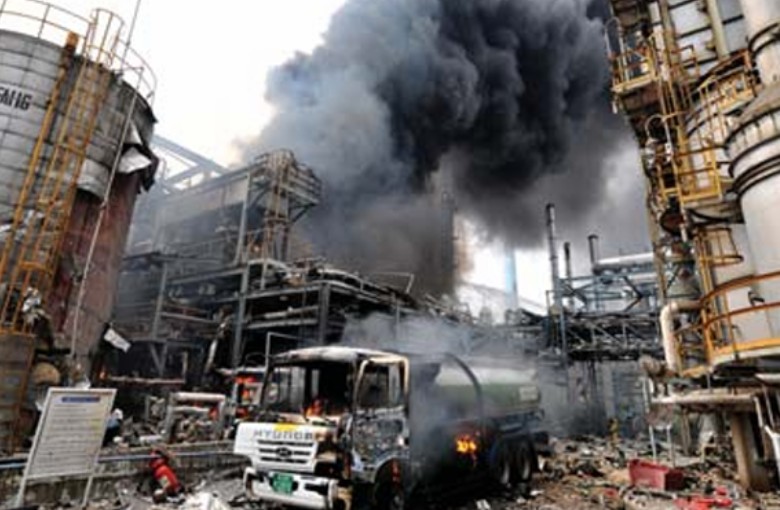
One of the most critical characteristics of fire and explosion accidents is that once they occur, they can quickly escalate into major industrial disasters, causing significant casualties and severe economic losses.
.
Therefore, high-risk facilities such as petrochemical complexes require strict and systematic safety management.
.
.
.
Repeated Explosions and a Serious Lack of Safety Awareness
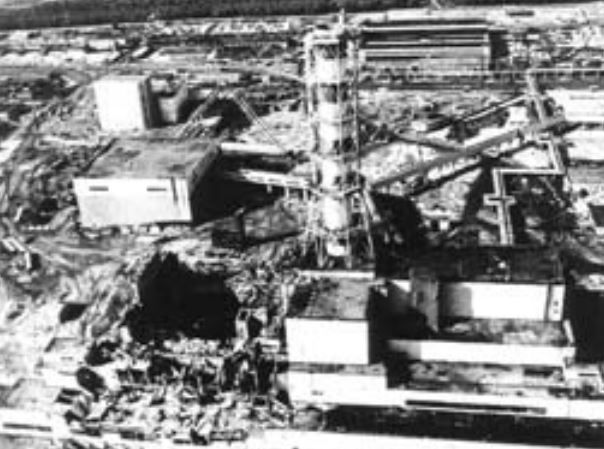
During its rapid industrial growth, South Korea experienced numerous fire and explosion incidents due to insufficient safety measures.
.
Although such accidents are relatively rare, their consequences are devastating—often resulting in large-scale financial losses and multiple casualties, drawing significant public attention.
.
Despite public outrage and media criticism of poor safety awareness, these tragic events tend to fade from memory over time, and similar accidents continue to recur.
.
.
.
Major Fire and Explosion Incidents in Korea
- 1971 Daeyeongak Hotel Fire in Seoul (165 deaths, 47 injuries)
- 1984 Daea Tourist Hotel Fire in Busan (38 deaths, 76 injuries)
- 1994 Ahyeon-dong Gas Explosion (12 deaths, 101 injuries)
- 1995 Daegu Subway Construction Gas Explosion (101 deaths, 202 injuries)
- 1999 Sealand Youth Training Center Fire (23 deaths)
- 2003 Daegu Subway Fire (192 deaths, 148 injuries)
.

. .
.
Human Error: A Leading Cause of Major Accidents
In the past, most accidents were caused by equipment failures. However, recent data shows that over 50% of incidents are now linked to human error, such as failing to follow work permits and safety procedures during maintenance operations.
.
To address this, the government introduced Process Safety Management (PSM) in 1996, particularly targeting oil refineries and petrochemical plants. While the system is now stabilizing, small and medium-sized chemical plants still face challenges due to frequent process changes and limited PSM implementation.
.
Many accidents occur because workers ignore safety procedures or become complacent due to repetitive tasks. A simple assumption like “it will be fine” can lead to catastrophic consequences.
.
.
.
.
Identifying Risks and Implementing Strong Preventive Measures
Fire and explosion accidents are largely preventable with proper safety practices.
.
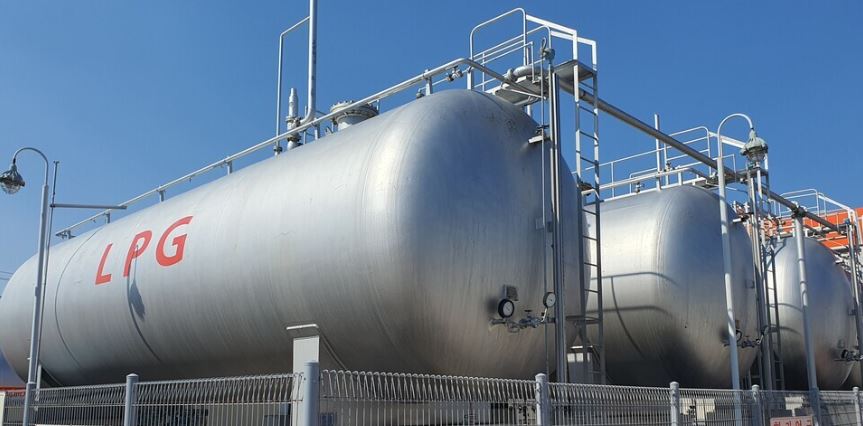
First, risk assessments must be conducted on hazardous materials and related process equipment to identify potential hazards.
.
Next, effective control measures should be implemented to ensure safety even in the event of equipment failure or human error.
.
Employers should ensure:
.
- Established and enforced operating procedures
- Strict work permit systems
- Continuous safety training
- Adequate safety personnel
.
Neglecting safety investment in favor of productivity can easily lead to repeated major accidents. This must never be overlooked.
.
.