
Small Negligence Can Lead to Big Disasters
What if Isaac Newton had ignored the falling apple? Would the law of gravity ever have been discovered? Just as small curiosity can change the world, small negligence can also lead to devastating consequences.
.
So, what are some tragic disasters around the world caused by carelessness?
.
.
The Titanic: A Tragedy That Sank Even Love
The famous movie Titanic is based on the real-life tragedy of the luxurious passenger ship that sank in 1912.
.
On April 14, 1912, the Titanic—once believed to be “unsinkable”—collided with an iceberg just four days into its maiden voyage and sank within 2 hours and 40 minutes. Out of 2,308 passengers, 1,513 lost their lives, making it one of the deadliest maritime disasters in history.
.
Why did such a “safe” ship sink? The causes included poor-quality steel, ignored iceberg warnings, and excessive speed driven by overconfidence. These small acts of negligence combined to create a catastrophic outcome.
.
This tragedy led to the establishment of SOLAS (Safety of Life at Sea), significantly improving global maritime safety standards.
.
.
Chernobyl: The Worst Nuclear Disaster
On April 26, 1986, multiple explosions occurred at the Chernobyl nuclear power plant in Ukraine, releasing massive amounts of radiation.
.
31 people died immediately, and about 92,000 residents within a 30 km radius were evacuated. Over the next five years, around 7,000 more people died, while hundreds of thousands suffered from cancer and birth defects. The environmental impact was estimated to be 400 times greater than the Hiroshima atomic bomb.
.
This disaster was preventable. Several warning signs had already appeared, but the reactor was operated without proper safety checks.
.
.
When a Department Store Collapsed
On June 29, 1995, South Korea experienced another tragic disaster—the collapse of the Sampoong Department Store.
.
This incident resulted in 501 deaths and 937 injuries. Structural cracks had already been detected due to reckless expansion, but the management ignored the risks and continued operations.
.
The result was catastrophic: massive loss of life and property damage exceeding $2 billion.
.
.
Heinrich’s Law: Warning Signs Matter
In the 1930s, safety researcher H.W. Heinrich introduced the “1:29:300 rule.” It states that for every major accident, there are 29 minor accidents and 300 warning signs beforehand.
.
This means accidents don’t happen suddenly—they are the result of ignored signals.
.
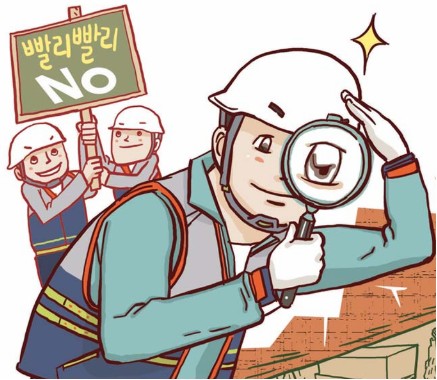
Being detail-oriented may sometimes be seen as overly cautious. However, in a world full of risks, attention to detail is essential for safety. Taking one extra moment to observe your surroundings can make all the difference.
.